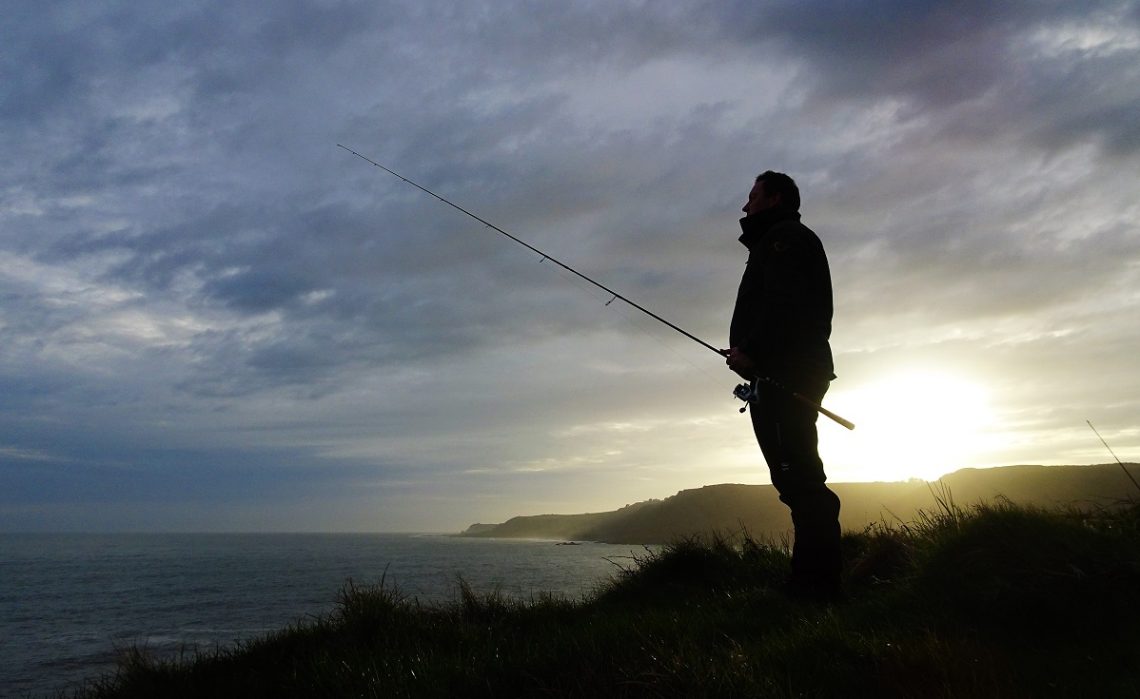
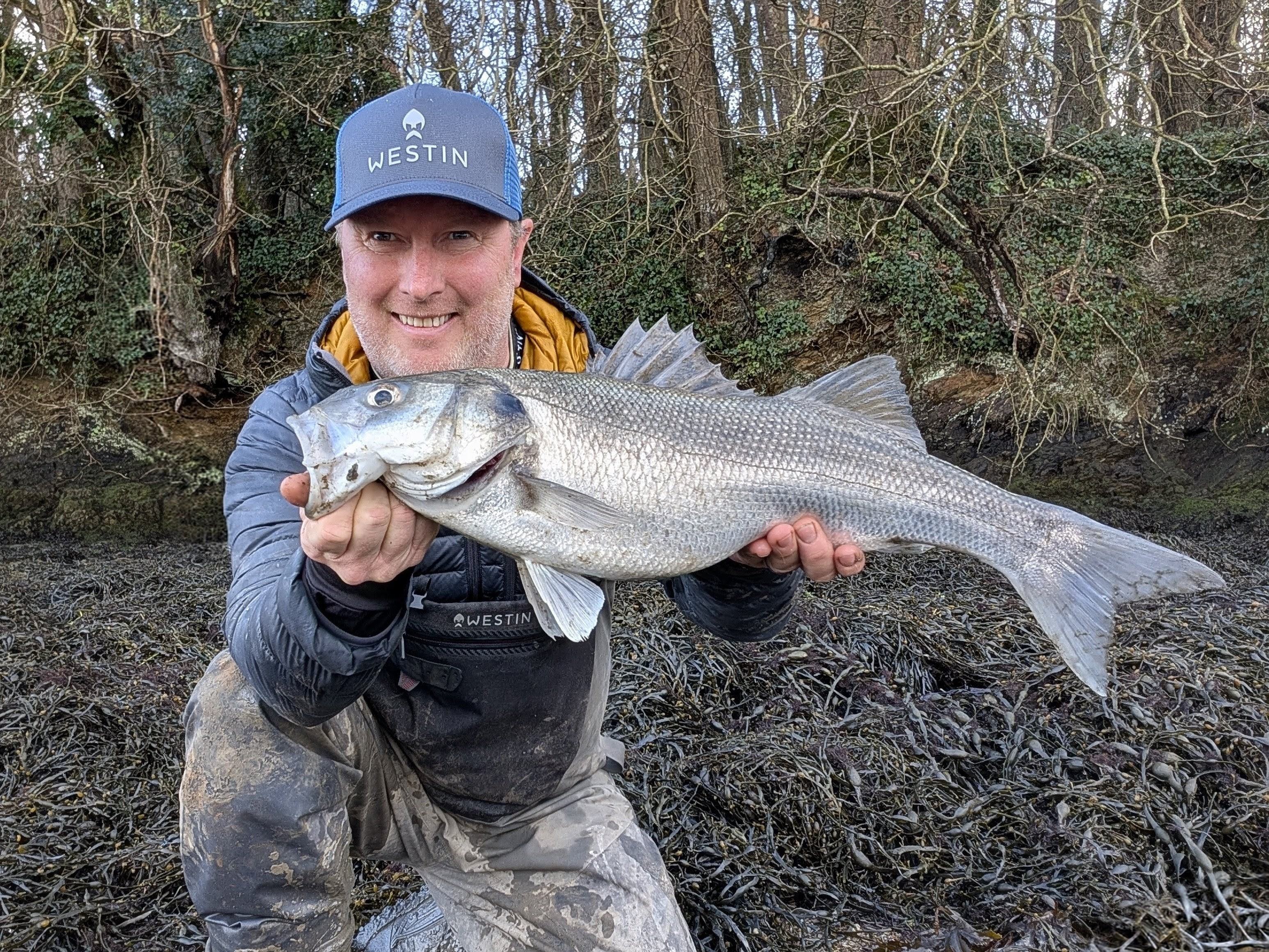
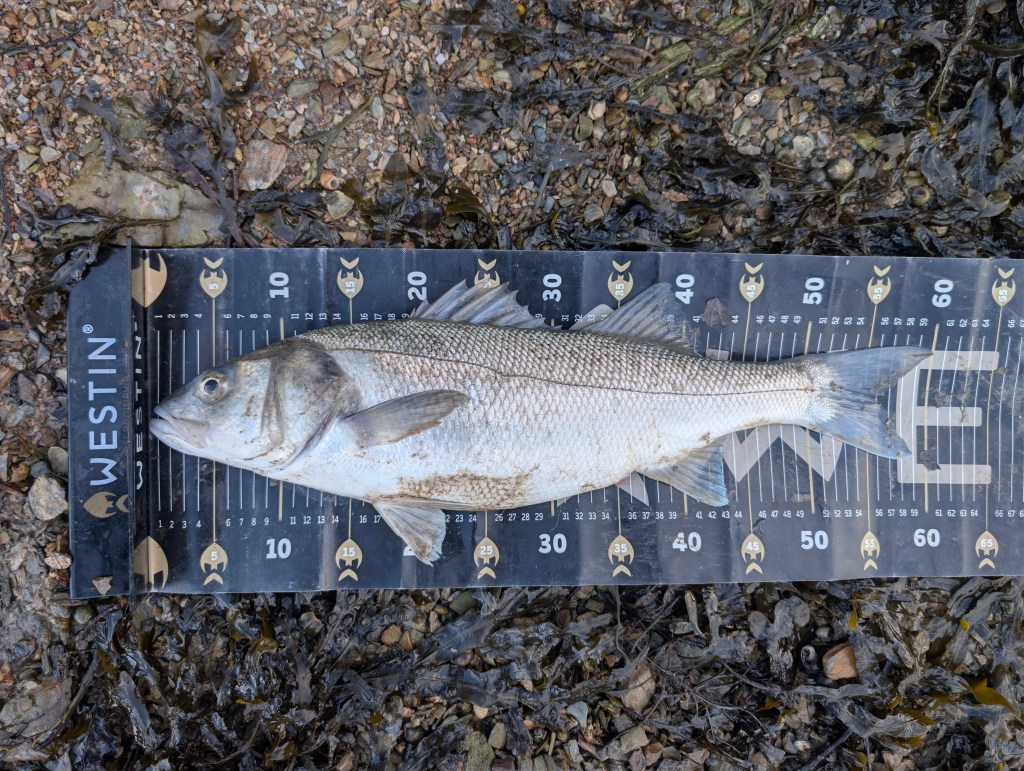
Based on the capture of the 60cm February bass in the featured image, the story of which I depict in this post, I would say ‘yes’ is the answer to the question posed…
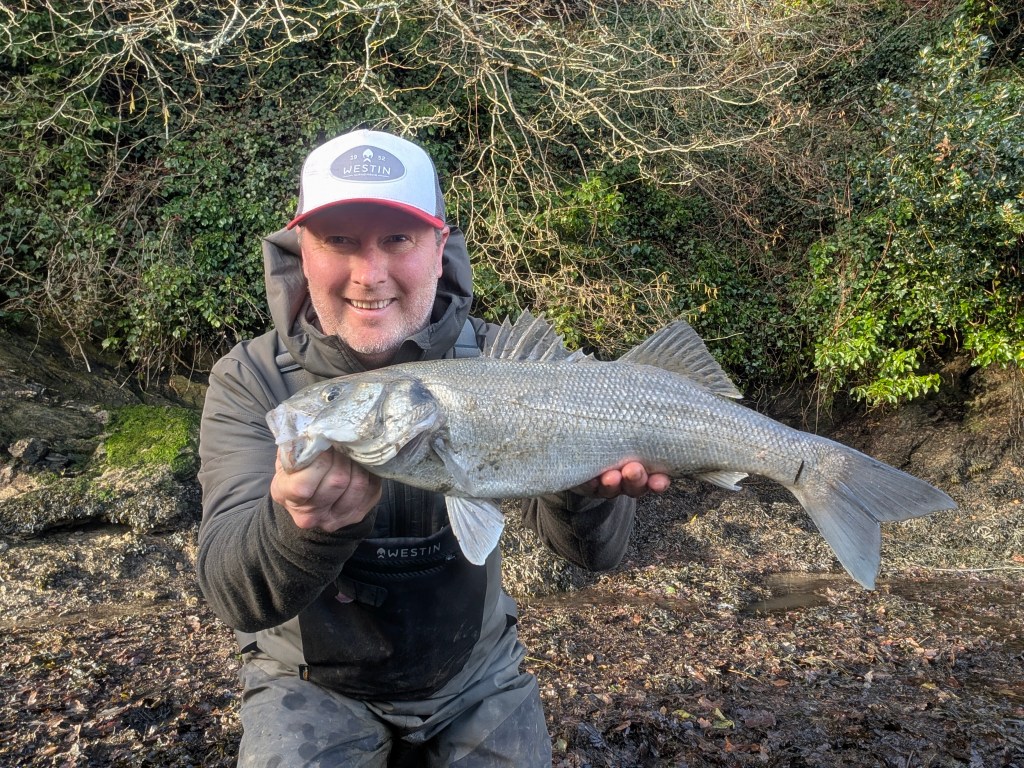
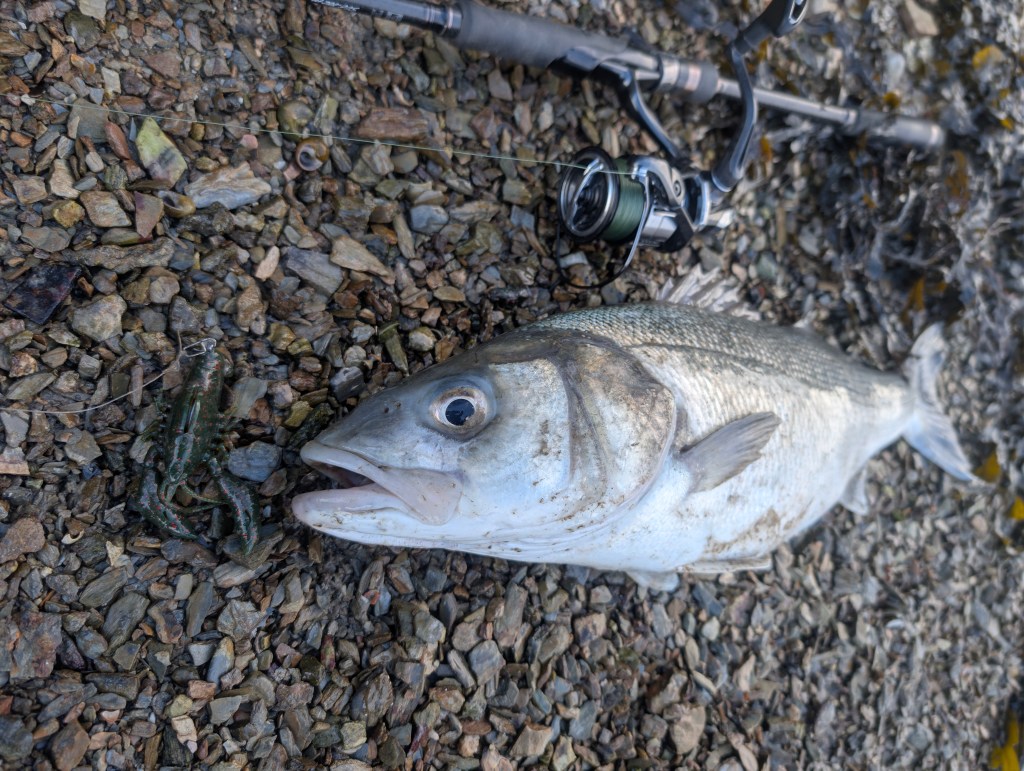
First up though, below is a lovely 53cm bass that I landed within a ‘skinny’ channel (narrow and shallow) on what has become my favourite winter lure – the Megabass Sleeper Craw. This was the fourth bass hooked and released in February during the six sessions that I completed in the month – so not a bad return for my efforts following some typically challenging wind, weather, and water conditions.
Cousins
Onto the 60cm bass then – my 4th largest in the month of February, with my biggest ever caught during this notoriously difficult month being the 71cm brute I landed here in February 2025.
So as I arrived on the mark during this solo mission, the plan I had hatched involved visiting a section of estuary that has been very kind to me over recent years, with a view to working my way up and down a section of muddy, gravelly shoreline, peppered with depressions, humps and clumps (of weed). No surprises here then!
Of significance however, is that there are two components to this venue that, from my point of view, really standout. Firstly, it is one of the many marks that I like to fish and guide my South Devon Bass Guide clients on in which if the bass are there, they will ‘reveal themselves’ not only within a specific period in the tide, but also on a certain size or range of tide…
The second element is an odd one… When there are dozens of mullet slooping, slurping, and splashing around and stirring up the muddy bottom, the bass aren’t generally in residence. Or if they are, then it is rare that I or we have managed to catch one.
I say ‘odd’ because it is a well-founded belief of mine that not only will bass utilise mullet as a kind of alarm system should I (or Bertie) get too close, but they will also attempt to ‘blend’ into a group of mullet in order to seize their unsuspecting prey, that can remain largely unperturbed by the cruising cousins of our friend the bass. Yes, I really do think they are that cunning!
Competitive edge
For whatever reason on this particular mark, if I witness just one or two ‘disturbances’ or a commotions in the uber-shallows (and I mean water that doesn’t even conceal their dorsal fin) then it is more likely to be a bass than a mullet – something that is unusual, but that provides me with a great deal of confidence should it occur.
Furthermore, something else that I have witnessed more and more over the past four seasons (although I could just be more tuned into this) is that when bass are actively feeding on shrimp, fry, or crabs tight into the muddy margins, there will very often be two of them seemingly hunting together.
What is especially noteworthy about this, is that when they are stalking the shoreline in tandem, then there will be added ‘competitive edge’ to their feasting – which is an integrant that most definitely places more of the odds in favour of the angler. ‘Eat it before my mate’ or go hungry being the order of the day.
Worth the wait
The whole area seemed rather lifeless at first – which of course wasn’t overly surprising in the final week of February. But as the water level continued to drop on this mid-range tide, a good 70m in the distance up-tide of my stance, I could see something sporadically breaking the surface…
Was it gaggle of mullet? Or was it a feeding seabird chancing its luck? Nope, even at this range, due to the ice rink-like surface layer, I immediately surmised it was a brace of bass nudging at the rocks and weed clumps, most probably looking for crabs. Oh yessss….
With each cast that I made out into the area I was fishing within, as I retrieved and paused the Sleeper Craw I remained watchful as this duo, or perhaps double duo gradually swirled periodically towards me. Do I gradually creep closer in order to intercept their movement? Or do I remain in situ, and allow them to come to me…?
I decided on the latter, primarily because they were feeding within such shallow water, and the section of foreshore now between myself and the bass was essentially a barren section of mud. Plus, where I’d planned on placing the creature bait in what I hoped would be the opportune moment was right on the edge of the next zone of weed and rocks some 15m from where I was stood. Yep, my heart in my mouth, as I knew from previous mistakes that I would probably only get one stab at this before spooking them…
To the untrained eye, the inconsiderable amount of water displacement caused by the tip of even a very large bass is something that can easily be missed – especially if there is a degree of ‘chop’ to the surface. But with my eyes totally focussed on the target, I made my move by arrowing the Craw so that it ‘plopped’ around 3-4m in front of where I anticipated what I could now confidently see was two bass apparently taking in turns to pounce of anything darting or scuttling in the shallows.
By maintaining a very tight line as the lure (any lure that is – the reasons why being something I will cover in a future video via my YouTube Channel) entered the water, I moved the creature bait only once. BANG! One of the Deadly Duo nailed the Sleeper Craw good and proper! This was a proper hit too – a ‘pinger’ as my 2nd Guide Joe and I like to call them, not the ‘bump’ or slight ‘tap’ that I often experience when using what are game-changing lures.
Feeling her weight, I lowered the rod instantly and brought it around to my left as what I knew was a good one attempted to ‘kite’ and swim towards me in an attempt to give me some slack line with which to shake the hook – the 6.4:1 retrieve ratio of my Shimano Vanquish 3000XG being invaluable in this exact scenario, and precisely why I use this superb reel.
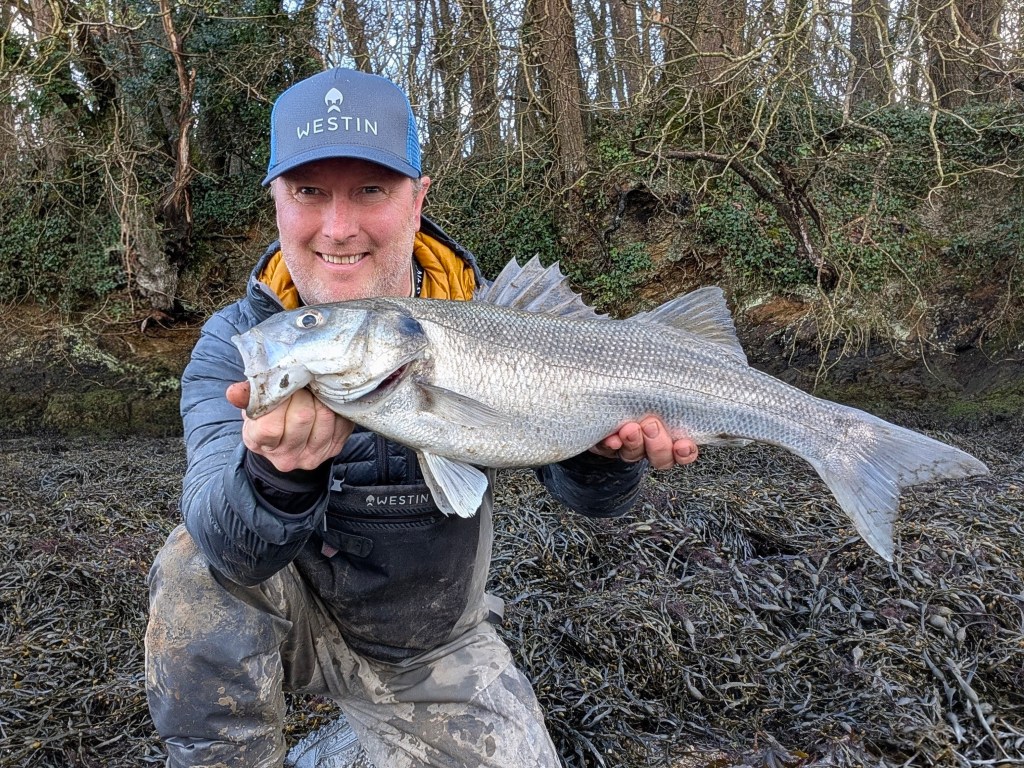
The reaction
Would I have caught one of these bass had I decided to ‘stalk’ them? Maybe. But in leaving them to go about their business and just WAITING, without disturbing them in any way before pulling the proverbial trigger just felt like the right thing to do from a watercraft perspective.
Yep, I’ve endured some bitter experiences in the past, whereby they’ve just zoomed off! However, I seem to be getting this right far more often nowadays, as I’ve learned to be patient when launching what is a substantial lure at 3″ and 17g! Come on Megabass – release a 2″ 12g version please!
I knew from experience that I was most probably only going to get one chance to garner what is a reactionary strike out of one of these feeding fish – that innate, inherent, and inbuilt prowess to jump on something that it ‘thinks’ is edible literally within a blink of an eye.
God I love catching these fish! I mean there is nothing that comes close in our waters is there…? Day or night. Winter or summer. Clear water or murky. Shallow water or deep. 7 miles inland up a creek or over the sand in the surf just to name a few of the settings in which they can be caught.
My Books
(Including my most recent release: The Lure of The Bass – The Revised Edition)
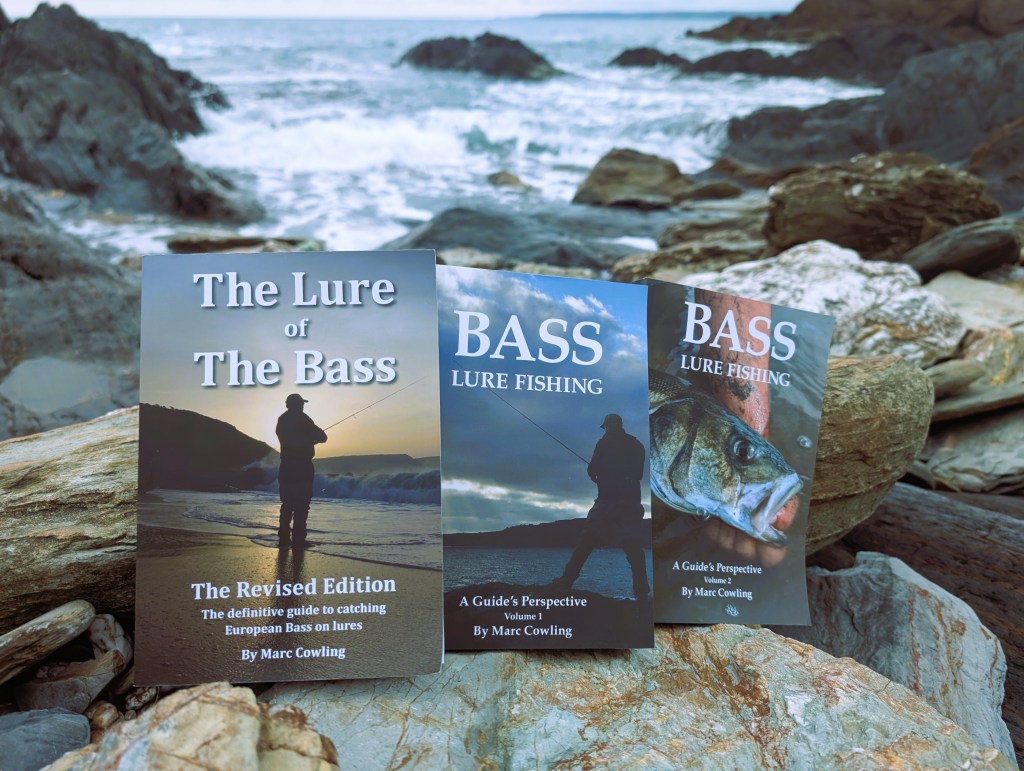
For stock levels, purchasing options (BACS or PayPal) and for information in regards to the contents of each of my respective publications you can follow the links below. Alternatively, if you wish to contact me, please either complete the Contact Form below or email me directly at: marccowlingblf@yahoo.com
The Lure of The Bass – The Revised Edition
Bass Lure Fishing – A Guide’s Perspective (Volume 1)
Bass Lure Fishing – A Guide’s Perspective (Volume 2)
Thanks for reading – Marc Cowling
Marc Cowling | Bass Lure Fishing | The Definitive Guide


 Marc Cowling | Bass Lure Fishing